How Jongokjeon Appropriates Siaeseolhwa
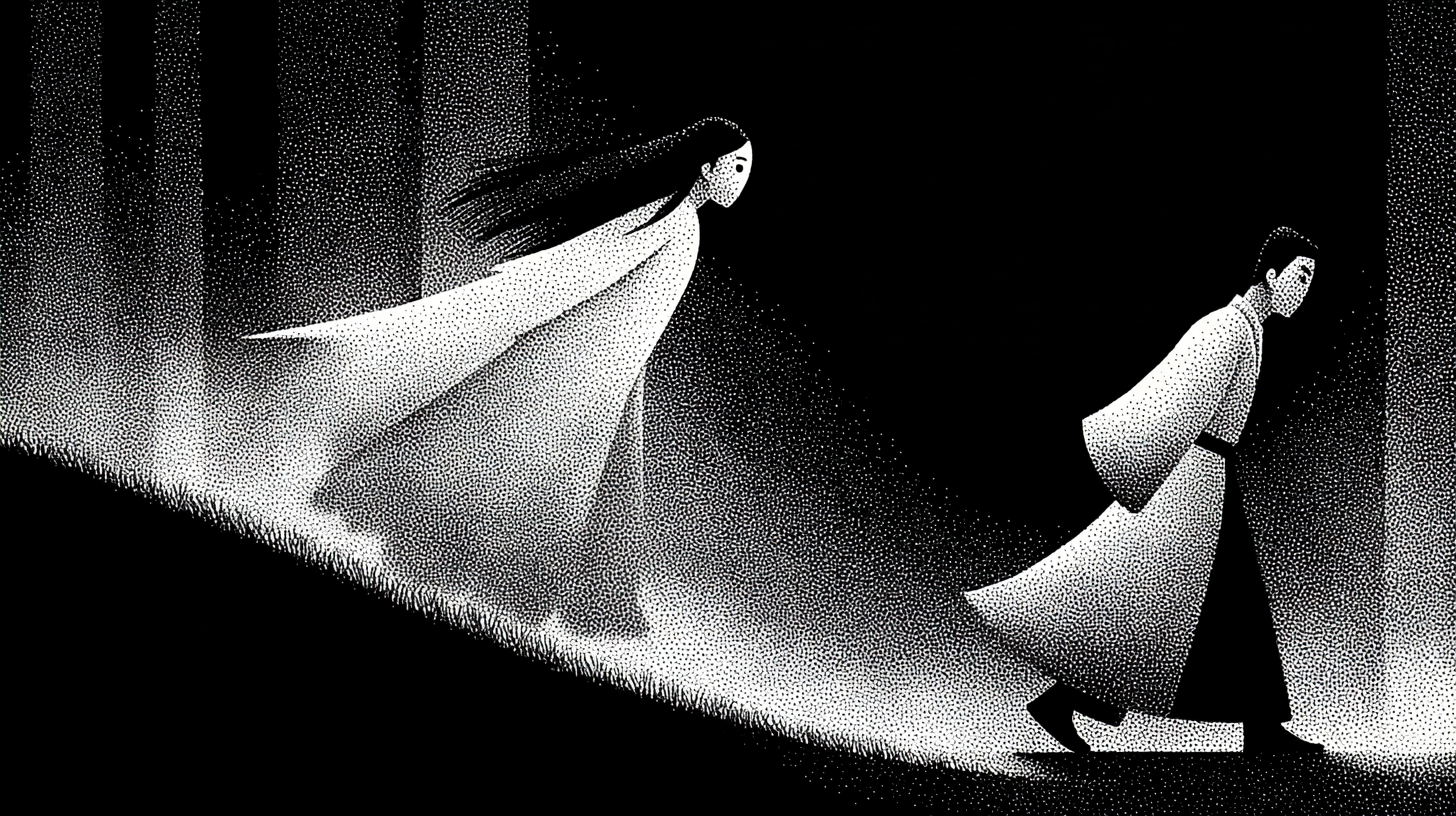
On the surface, Jongokjeon appears to be a light comedy of manners — a clever woman and an older relative collaborate to humble a pretentious young scholar.
But the mechanism it employs is precisely that of siaeseolhwa:
- A beloved who is reported dead
- Ghostly nocturnal visitations
- A protagonist convinced he now occupies a liminal state
- A public revelation scene designed for maximum embarrassment
The difference lies entirely in tone and purpose.
5.1. Traditional Siaeseolhwa vs. Jongokjeon‘s Parody
The following comparison illuminates the transformation:
| Traditional Siaeseolhwa | Jongokjeon | |
|---|---|---|
| The beloved | Genuinely dead; her return is uncanny | A living courtesan performing a role |
| The supernatural | An authentic intrusion from the other world | An illusion engineered by living humans |
| The revelation | Results in horror, insanity, or death | Produces comic disgrace |
| The function | Explores cosmic fear and the terror of loss | Delivers social satire |
The target is no longer metaphysical dread, but social critique:
- Jongok’s anti-erotic posture is revealed to be fragile and performative
- His transition from rigid chastity to rationalized indulgence exposes the hypocrisy endemic to male virtue discourse
- His ready belief that he has become a “living ghost” after sleeping with a “spirit-woman” mocks both superstitious literalism and narcissistic self-dramatization
In essence, Jongokjeon borrows the emotional grammar of corpse-love tales — only to invert it into a elaborate practical joke at the expense of a would-be moral exemplar.
Position in Literary History: From Spectral Terror to Worldly Laughter
Jongokjeon occupies a fascinating crossroads in Korean narrative history:
6.1. Within the Tradition of Worldly Satire
It belongs to the tradition of 세태소설 (setae soseol), works that dissect the follies of their own era — especially the sexual double standards of the yangban elite.
It likely draws structural inspiration from pansori (판소리) narratives such as Maehwa Taryeong (梅花打令) and shares thematic kinship with works including:
- Baebijangjeon (裵裨將傳)
- Oyoranjeon (烏有蘭傳)
- Park Ji-won’s (朴趾源) Hojil (虎叱, “A Tiger’s Rebuke”)
All of these works ridicule male hypocrisy, unchecked lust, and the obsession with maintaining appearances.
6.2. Dialogue with the Siaeseolhwa Tradition
Simultaneously, by staging a fabricated ghost romance, Jongokjeon enters into dialogue with the older siaeseolhwa tradition, demonstrating how its motifs can be detached from horror and repurposed for satirical ends.
For students of Korean supernatural literature, this renders Jongokjeon an invaluable case study:
- It marks a historical stage at which the ghost-lover apparatus had become so familiar that it could be deployed for comedic effect
- It demonstrates how folk ghost patterns migrate into sophisticated literary fiction, subsequently mutating into instruments of social criticism
Why This Pairing Illuminates Korean Literary History
Placing siaeseolhwa and Jongokjeon side by side enables us to trace a complete arc in Korean narrative evolution:
| Stage | Representative Works | Treatment of Ghost-Love |
|---|---|---|
| Early | Folk siaeseolhwa | Terrifying and tragic; loving the dead invites madness or death |
| Middle | Geumo Sinhwa (金鰲新話) and other jeon’gi romances | Refined and poetic; ghostly relationships become metaphors for desire, loss, or idealized love |
| Late | Jongokjeon and related satirical works | Parodic and subversive; the ghost-lover script is inverted to mock human vanity and moral posturing |
Across this trajectory, one preoccupation remains constant:
Korean storytellers have long been fascinated by what transpires when love attempts to transgress its proper boundaries — whether that means loving the dead, loving a dream, or being deceived into believing one has done so.
Conclusion: The Ghost as Literary Instrument
Jongokjeon reveals something essential about the maturation of Korean narrative: the supernatural is not merely a source of fear but a flexible literary instrument.
In the hands of a satirist like Mok Tae-rim, the ghost-lover motif becomes a scalpel for dissecting social pretension. The same narrative structure that once evoked existential dread now produces knowing laughter — yet both responses emerge from the same fundamental anxiety about the boundaries of the real and the limits of human self-knowledge.
In future Kwaidanote installments, we will progress from this overview to close readings:
- A serious siaeseolhwa in which the ghost is authentically present
- Jongokjeon‘s fabricated ghost episode examined in textual detail
- Later modern reinterpretations that continue to interrogate these themes
Through such comparative analysis, we can observe, passage by passage, how the same haunted framework generates fear, longing, or laughter — depending entirely on who is manipulating the strings behind the screen.
Latest Posts
- The Emperor Who Became Japan’s Most Feared DemonThe Abdication Trap In 1141, Toba forced Sutoku to abdicate in favor of a younger prince, Emperor Konoe. The abdication decree contained… Read more: The Emperor Who Became Japan’s Most Feared Demon
- Why Korea’s Greatest Geomancer Couldn’t Find a Burial Site—And What That Tells Us About KarmaThe Interesting Bits They Don’t Tell You Beyond the central narrative, this tale carries several layers worth noting: The Geomancer’s Dilemma Yi… Read more: Why Korea’s Greatest Geomancer Couldn’t Find a Burial Site—And What That Tells Us About Karma
- The Matsutooya Haunting: When Two Living Spirits Turned Deadly in Edo-Period KyotoThe second spirit also eventually regained consciousness and revealed she was still alive. Ashamed and unable to face the boy, she refused… Read more: The Matsutooya Haunting: When Two Living Spirits Turned Deadly in Edo-Period Kyoto