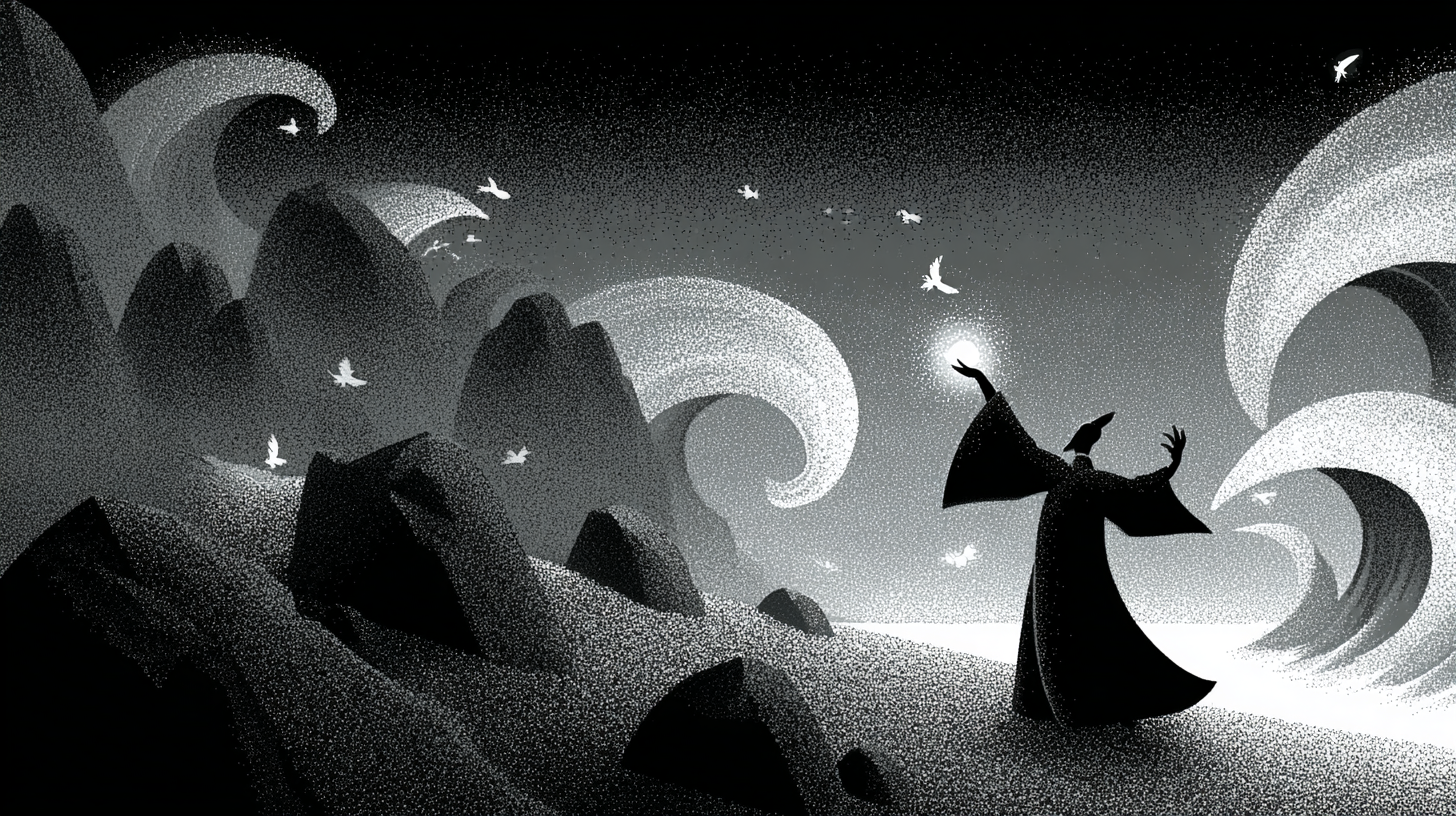
The tale concludes with a revealing note: this same Chitoku later traveled to the capital, where he encountered Abe no Seimei. Seimei perceived Chitoku’s shikigami—his spirit servants—and concealed them through superior technique. Chitoku could not retrieve them.
Yet the compiler adds a caveat: this failure stemmed not from inferior ability, but simply from ignorance of one specific art. The implication lingers: in raw power, perhaps, the provincial monk was Seimei’s equal.
Points of Interest Beyond the Narrative
Several aspects of this tale reward closer attention.
The Harima connection. This province appears repeatedly in onmyōji lore as a breeding ground for powerful folk practitioners. Most notably, Ashiya Dōman—the sorcerer who would become Seimei’s legendary rival in later literature—is traditionally said to have originated from this region. The text seems aware of Harima’s reputation, treating it as a place where such figures naturally emerge.
The intertextual link. Volume 24 of the Konjaku Monogatari-shū contains another story (Story 16) in which Seimei conceals a visiting monk’s shikigami. Story 19 explicitly identifies that monk as Chitoku, creating a deliberate connection between the two narratives. This structural choice invites readers to hold the provincial master and the capital master in comparison—neither wholly superior, each possessing knowledge the other lacks.
The question of justice. Chitoku’s decision to release the pirates rather than hand them to authorities is striking. He explicitly states that killing them would “add to the weight of sin.” This reflects a Buddhist ethical framework operating alongside the Chinese cosmological system of onmyōdō—a reminder that these practitioners often synthesized multiple traditions in their work.
Historical context of piracy. The fear of maritime raiders was very real in Heian Japan. Ki no Tsurayuki’s Tosa Nikki, written in 935 CE, documents the constant anxiety of sea travelers regarding pirate attacks. That an onmyōji might address such threats through ritual means suggests how deeply these practitioners were woven into the fabric of daily life.
Final Thoughts
What stays with me about Chitoku is not the spectacular magic—the pirates drifting back in supernatural stupor, the invisible binding worked upon the waves. It’s the aftermath.
He could have let them die. The villagers wanted it. Justice, by any conventional measure, demanded it. Instead, he issued a warning and let them go.
There’s something in that choice that feels essentially Japanese—a recognition that power exercised to its fullest extent is not always power well used. The same restraint appears in countless classical tales: the ghost who could destroy but chooses to depart, the deity who could punish but accepts an apology instead.
Perhaps that’s the real difference between Chitoku and Seimei. Not in technique, not in raw ability—but in what each chose to do with what they knew.
Seimei built a legacy that would echo for a thousand years. Chitoku released some pirates on a beach in Harima, and walked back into obscurity.
I’m not sure which one understood power better.
Latest Posts
- The Emperor Who Became Japan’s Most Feared DemonThe Abdication Trap In 1141, Toba forced Sutoku to abdicate in favor of a younger prince, Emperor Konoe. The abdication decree contained… Read more: The Emperor Who Became Japan’s Most Feared Demon
- Why Korea’s Greatest Geomancer Couldn’t Find a Burial Site—And What That Tells Us About KarmaThe Interesting Bits They Don’t Tell You Beyond the central narrative, this tale carries several layers worth noting: The Geomancer’s Dilemma Yi… Read more: Why Korea’s Greatest Geomancer Couldn’t Find a Burial Site—And What That Tells Us About Karma
- The Matsutooya Haunting: When Two Living Spirits Turned Deadly in Edo-Period KyotoThe second spirit also eventually regained consciousness and revealed she was still alive. Ashamed and unable to face the boy, she refused… Read more: The Matsutooya Haunting: When Two Living Spirits Turned Deadly in Edo-Period Kyoto