Fascinating Facts Behind the Legend
It Was Based on a Real Case
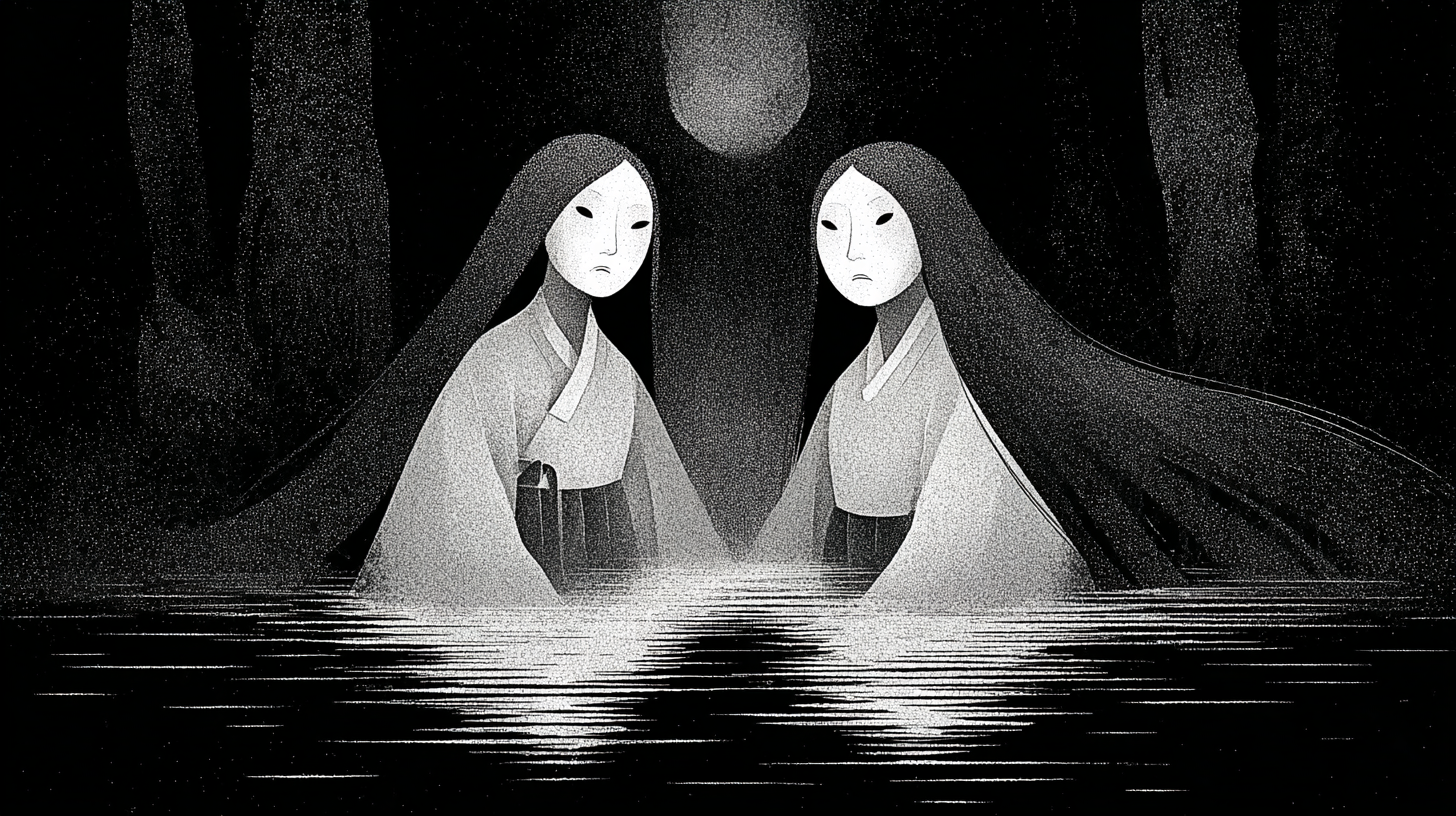
The tale of Janghwa and Hongryeon is not pure fiction. It originated from an actual criminal investigation that took place in 1656 in Cheolsan-gun, North Pyeongan Province. The real magistrate who solved the case, Jeon Dong-heul, became something of a local legend. Generations later, his descendants commissioned a writer named Park In-su to transform the family’s account into a novel that would spread the story throughout Korea. The result was Janghwa Hongryeon jeon—one of the most beloved works in classical Korean literature.
Early Forensic Investigation
The historical Jeon Dong-heul conducted his investigation using the Sinju Muwon-rok (New Annotated Guide toErta)—essentially a Joseon-era forensic manual. The text explained that drowning victims produce white foam from their mouths due to struggling before death, and that suicide victims typically leave no possessions and remove their shoes before entering the water. When investigators examined Janghwa’s body, they found she had been carrying packed belongings and silver coins—inconsistent with suicide. A subsequent examination confirmed she had never been pregnant. The ‘fetus’ was revealed to be constructed from rat skin and other materials. This systematic forensic approach helped establish the truth centuries before modern crime scene investigation.
The Real Villain May Have Been the Father
Historical analyses suggest the actual dynamics may have been more complex than the standard tale presents. In the real case, once Bae Mu-ryong believed the fabricated evidence, he himself ordered his daughter’s death—his stepsons merely carried out the execution. Some scholars have noted that Joseon inheritance law gave daughters priority over stepmothers, creating financial incentives for both Lady Heo and Bae Mu-ryong to eliminate the girls. Certain folk versions of the story even hint at more disturbing possibilities: that the father kept his daughters unmarried longer than appropriate because he wanted them nearby for troubling reasons. These darker interpretations remind us that the sanitized supernatural tale may have softened a far grimmer reality.
The Magistrate’s Remarkable Life
Jeon Dong-heul’s career both before and after the case was extraordinary. He raised volunteer troops during the Manchu invasions and served the crown prince during his captivity. After solving the sisters’ case in Cheolsan, he rose to become a naval commander and held numerous other positions. He lived to the remarkable age of 96—considered almost supernaturally long in an era when life expectancy was far shorter. When he died, King Sukjong personally sent officials to mourn him and arrange his burial. The prophecy that the grateful ghosts made—that his career would prosper—seems to have been fulfilled many times over.
Alternative Endings
The tale exists in multiple versions with varying conclusions. In some, the sisters are reborn as Bae Mu-ryong’s daughters through his third wife. In others, they reincarnate as the wives of Lady Heo’s sons, allowing them to serve both their former father and watch over the family. In yet another version, they are reborn as the daughters of Magistrate Jeong Dong-woo himself and later marry back into the Bae family, creating a cycle of karmic reconciliation.
The Virgin Ghost Archetype
Janghwa and Hongryeon exemplify the Korean concept of the cheonyeo gwishin—the ‘virgin ghost.’ In Korean supernatural tradition, young women who die before marriage carry particularly strong han (a uniquely Korean concept of deep-seated grief, resentment, and unresolved sorrow). These spirits cannot rest until their wrongs are addressed. The sisters’ tale became a foundational example of this archetype, influencing countless subsequent ghost stories and even modern Korean horror cinema.
Cinematic Legacy
The story has been adapted to film at least seven times, starting with a 1924 silent film and continuing through versions in 1936, 1956, 1962, and 1972. The most internationally famous adaptation is Kim Jee-woon’s 2003 psychological horror film A Tale of Two Sisters (using the Korean title Janghwa, Hongryeon), which became the highest-grossing Korean horror film and the first Korean film released theatrically in the United States. It was later remade in Hollywood as The Uninvited (2009). The 2003 film takes significant liberties with the source material, transforming the supernatural revenge narrative into a psychological thriller about trauma, grief, and mental illness—yet the core themes of sisterly bonds and family horror remain.
A Note of Caution
This tale emerged from a specific historical and cultural context—17th-century Korea under Confucian social structures that we would find deeply problematic today. The story reflects the vulnerable position of women in patriarchal societies: stepdaughters with no legal protections, wives whose security depended entirely on producing male heirs, and daughters whose honor (and lives) could be destroyed by accusations impossible to disprove.
These conditions were hardly unique to Korea. Similar tales of stepmother cruelty, inheritance conflicts, and women destroyed by false accusations appear across cultures worldwide. The story of Janghwa and Hongryeon resonates not because it reveals something particular about Korean culture, but because it addresses universal human experiences of family betrayal, injustice, and the desperate hope that truth will eventually prevail.
As with all folklore, the tale has been shaped and reshaped through centuries of retelling. Various versions emphasize different moral lessons, assign blame differently, and offer different resolutions. The ‘true’ story—whatever occurred in 1656—has long since merged with legend. What remains is a powerful narrative about the belief that wrongdoing cannot stay hidden forever, even if it takes ghosts to bring it to light.
Latest Posts
- The Emperor Who Became Japan’s Most Feared DemonThe Abdication Trap In 1141, Toba forced Sutoku to abdicate in favor of a younger prince, Emperor Konoe. The abdication decree contained… Read more: The Emperor Who Became Japan’s Most Feared Demon
- Why Korea’s Greatest Geomancer Couldn’t Find a Burial Site—And What That Tells Us About KarmaThe Interesting Bits They Don’t Tell You Beyond the central narrative, this tale carries several layers worth noting: The Geomancer’s Dilemma Yi… Read more: Why Korea’s Greatest Geomancer Couldn’t Find a Burial Site—And What That Tells Us About Karma
- The Matsutooya Haunting: When Two Living Spirits Turned Deadly in Edo-Period KyotoThe second spirit also eventually regained consciousness and revealed she was still alive. Ashamed and unable to face the boy, she refused… Read more: The Matsutooya Haunting: When Two Living Spirits Turned Deadly in Edo-Period Kyoto