The Dream at the Seta Post-House
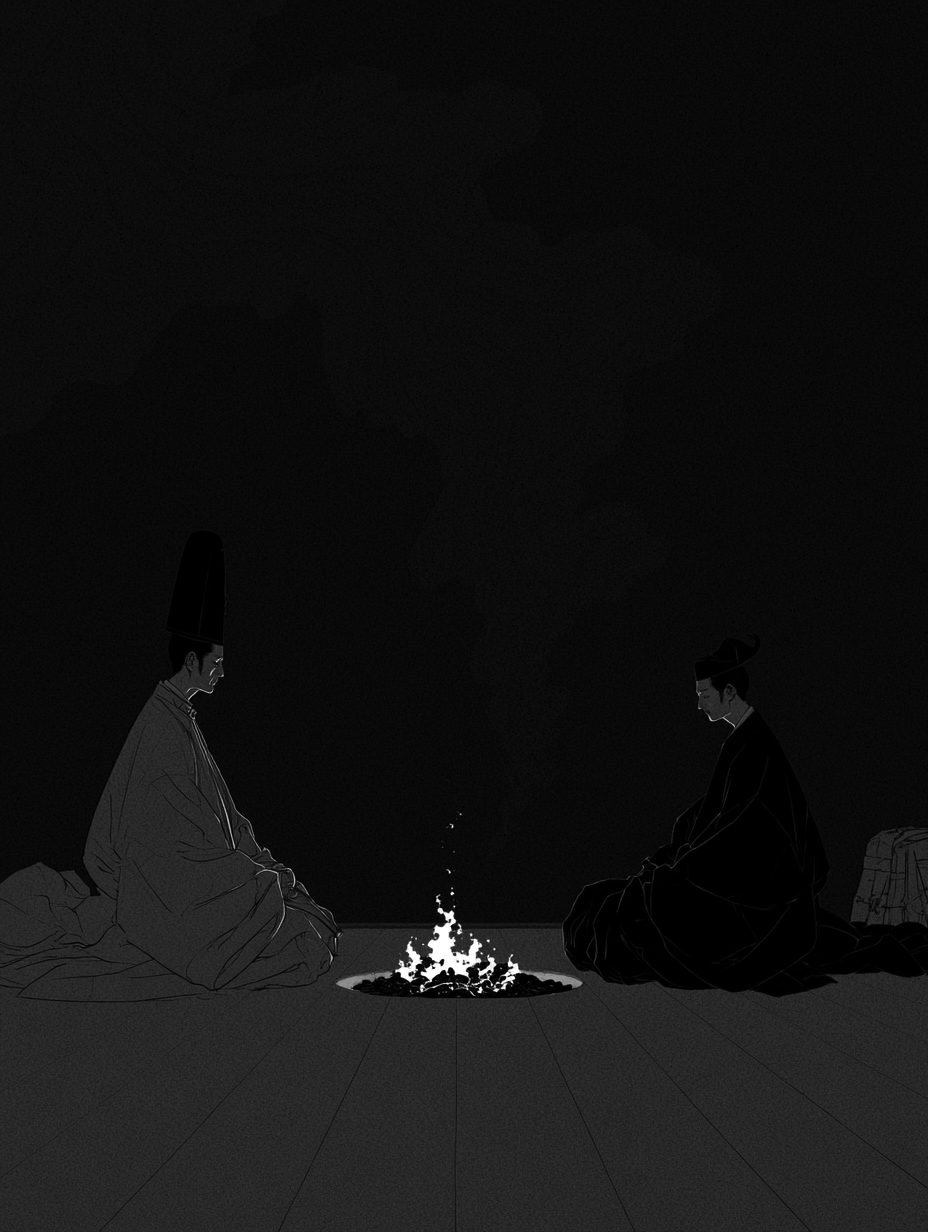
The post-house at Seta stood where the road from the east comes down to the water, and in the eleventh month it was full every night and warm in only one room.
Two men were lodged in it that night who did not know each other. One was an official of the granary bureau, riding home to the capital after a long circuit through the eastern provinces, tired in the way that men are tired at the end of a journey rather than at the end of a day. The other was going the other way, out to the provinces on business of his own: he was making the offerings to his own star, which a man does at certain years, and he had timed the journey to the days that suited it. He was Yuge no Koreo, Doctor of the Heavens, of the Bureau of Yin and Yang.
The evening went the way such evenings go. The grooms had the horses; the servants had the baggage disputes; the two travelers had the fire. The official talked first, because tired men do — the state of the fords, the price of fodder in the east, the bridge that was out and the bridge that was rumoured to be out, which are the two great subjects of any road. Koreo listened more than he spoke. When the official asked, out of politeness, what took a gentleman east so late in the season, he answered without any weight on it: there were offerings a man makes to the star he was born under, in certain years of his life; the days for it were fixed; he had set his travel to the days. A man whose business is the calendar moves inside it even on the road.
The official said that must be a great deal of trouble, and Koreo said that it was less trouble than the alternative, and neither of them laughed, and they banked the fire and slept.
Before dawn the official woke the whole room. He sat up out of a dream and could not lie down again. He asked the servant to bring the lamp closer, and then, because there was nothing else to do with what was in him and because the man across the room had let slip his office, he crossed the floor and asked whether it was true that the gentleman read such things.
Tell it to me, said Koreo.
The official told it. What he had seen, and in what order. Koreo listened with his hands in his sleeves and did not interrupt.
When it was finished he said: How long until you reach your house?
Tomorrow, by the middle of the day.
You will reach it, said Koreo. Sit down.
Then he gave the official the strangest set of instructions the man had ever received, and he gave them in the tone of a physician describing a dosage — no smoke, no invocation, nothing to be recited.
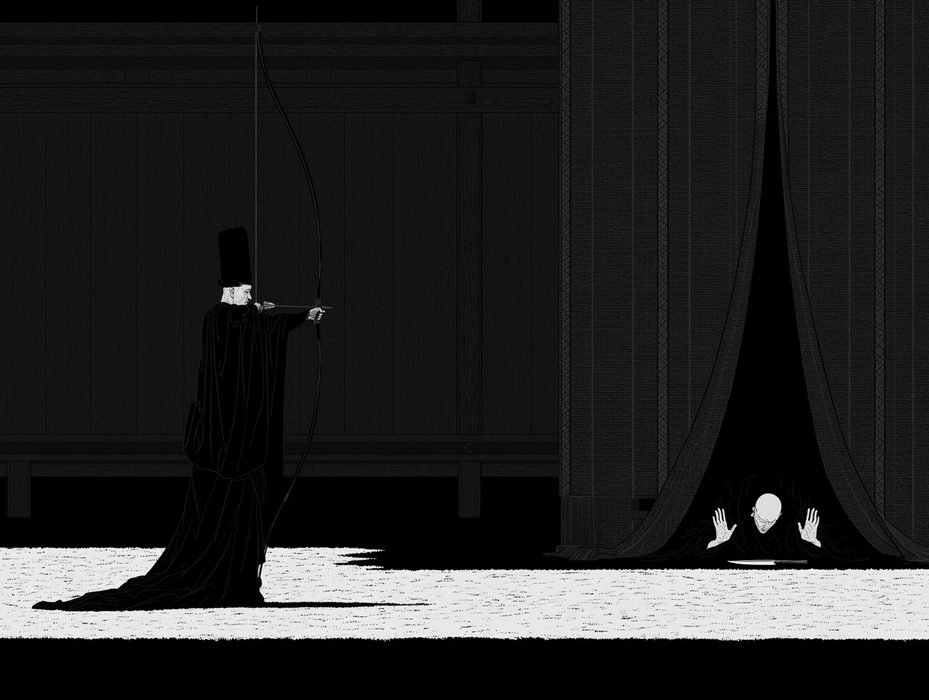
When you arrive, he said, do not go in. Have the baggage set down in the courtyard and send the servants off to carry it in, all of them, so that you are left standing alone. String your bow. Set an arrow to it. There is a corner of your house on the northeast — the ox-tiger corner. Turn and face it and draw the bow to the full, and hold it drawn, and say this aloud, so that it can be heard:
I know already that you mean to kill me. Come out now. If you do not come out, I will shoot you where you are.
Say it exactly. Do not go closer. Do not lower the bow while you speak.
The official asked what was in the northeast corner of his house.
Koreo said: You will see him when he comes out.
They parted at the ford in the morning and never met again.
The road home took the official the rest of that day and the morning after, and it was the worst traveling of the whole circuit, though the weather was fine and the fords were low. A man can ride all day with a sentence in him. He said it over to himself at the resting places until the servants asked if he was unwell; he found himself watching the northeast the way one watches a doorway in a strange house. He did not consider disobeying.
The next day at the hour he had been told, the official came to his own gate. He got down. He had the baggage set in the courtyard and told the servants to carry it in — all of them, at once, which annoyed them, since it made two trips of one. Then he stood alone in his own yard with his hands shaking, and strung the bow, and set the arrow, and turned to the northeast.
There was a low store-room built out on that side, and a screen of matting, and behind the matting the ordinary lumber of a household. He drew the bow to the full. He said the sentence he had been given, and he heard his own voice come out of him louder than he had intended, and it went into the corner of the yard and stopped there.
For the space of three breaths nothing happened.
Then the matting moved and a man came out from behind it on his hands and knees with his palms up. He was a monk, or dressed as one. He had a knife and he had put it down before he showed himself, which the official noted afterward with a peculiar clarity, as men note small things at such moments.
He did not run. He said, before anyone asked him anything, that the mistress of the house had told him to do it, and that she had said he must not fail.
The official held the bow drawn until the servants came back out.
The rest is the ordinary business of that world. The man was bound and handed to the officers of the capital police, and he said the same thing to them that he had said in the yard, and it was written down. Of the wife the record says only that the husband parted from her, finally and forever.
Behind the Tale
Nothing is performed in this story. No fire is lit, no formula recited, no instrument comes out of a sleeve; a man of the Bureau of Yin and Yang listens to a stranger’s dream and then issues instructions, and the instructions are the entire working. They are the Konjaku compilers’ own, almost word for word — set the baggage down, send every servant indoors at once, string the bow alone, face the northeast corner, draw to the full, and say aloud that you already know. What makes them work is that they are right about where a man is lying hidden. The corner is not picked for atmosphere. The northeast — the ox-tiger quarter — was the direction from which harm was expected to enter a dwelling; naming it, Koreo names the unluckiest wall of the house. Yuge no Koreo held office as a Doctor of the Heavens, the post charged with watching the sky for irregularities and reporting them to the throne, so reading a dream lay inside his competence rather than beside it. The errand on the road is the record’s: the star-offerings a man makes in certain years, on days the calendar fixes for him. Of the dream itself nothing survives. The record calls it an evil one and moves straight to the consultation, so what the official saw stays with the reader — as does his name, which the page no longer carries. The compilers close on a warning of their own about how a man should regard his wife. That is theirs, and it is left with them.
This is the first of the 26 tales in ONMYOJI, each one followed by a note on where it comes from.