The Round Charcoal-Holder
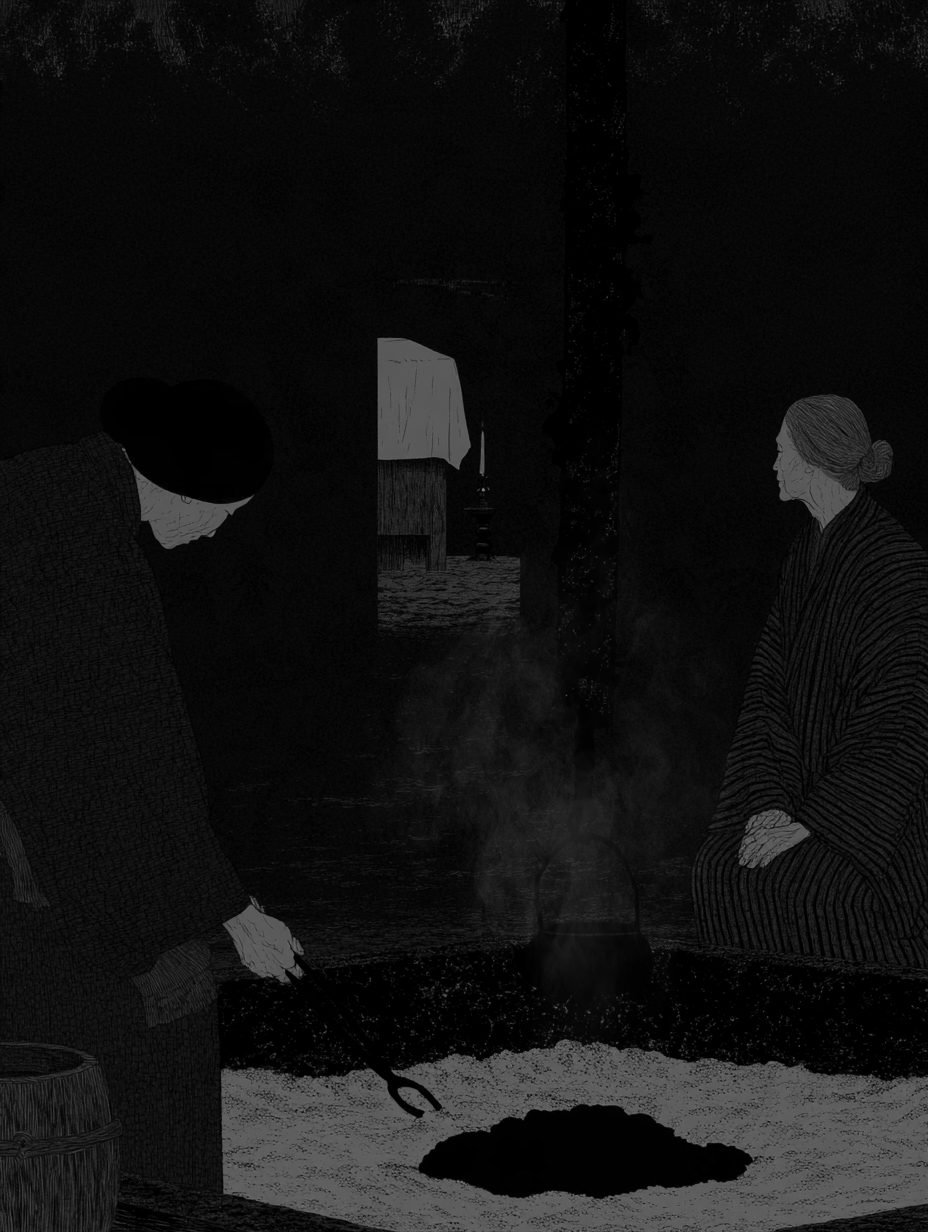
Two women kept the hearth that night.
It was the custom of the place, during a mourning, never to let the fire go out; so while everyone else in the house lay down to sleep in the big guest-room, the elder of the two sat on one side of the great sunken hearth and the mother of the household sat on the other, with the charcoal-holder at her knee. The coffin stood in the inner room. The old woman in it had been very old, and the relatives had been coming in all afternoon, and now lay in the guest-room under whatever quilts the house could find. The dead woman’s own daughter was among them, a woman who had been sent home from her marriage because her mind had gone.
The mother fed the fire. Every so often she took up the tongs, chose a piece from the holder, set it where the glow was thinning and waited for it to catch. It was work that asked nothing of her, which was as well. The elder woman said little. Neither did she. The house was quiet around them.
Then there was a footstep at the back door.
Somebody was coming in along the earth-floored passage. The mother looked up. It was the old woman who had died.
She knew her at once, and not by the face. In life the old woman’s back had bent so far that her hem dragged, and rather than let it drag she had taken the trailing cloth up into a three-cornered fold and stitched it down in front; the mother had sat by her while she sewed it. There was the fold now, exactly as it had been. There were the stripes of the cloth, which the mother had known for as long as she had lived in this house. She looked no higher. There was no time to. The figure was already at the end of the hearth, walking as she had always walked, and as she went past, her hem brushed the charcoal-holder standing at the mother’s side. It was a round one. It spun, round and round, and was still turning after she had gone by.
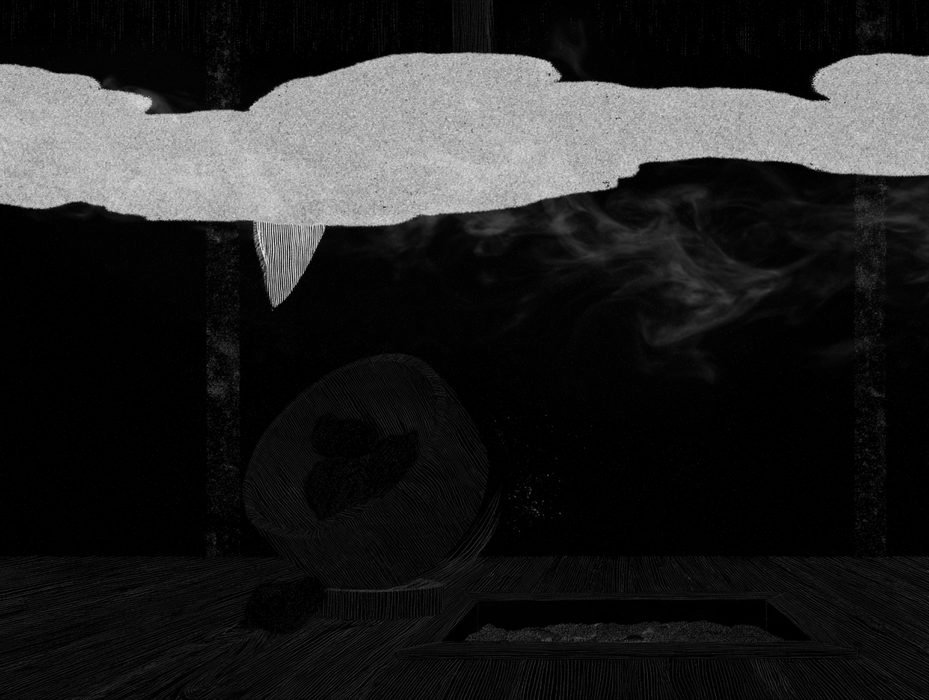
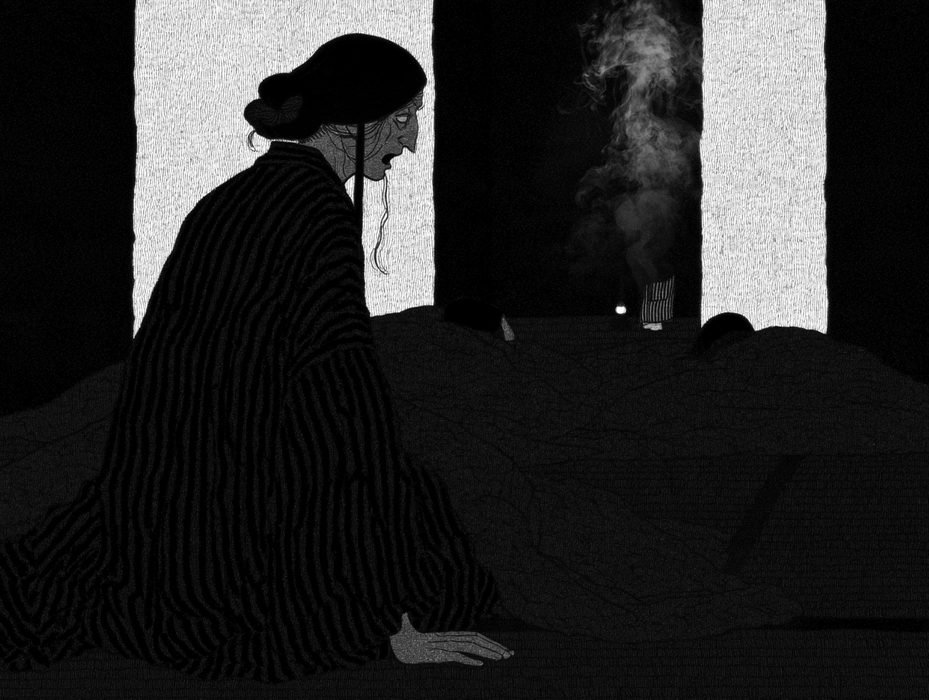
The mother was not a timid woman. She turned where she sat and watched the bent back go away from her down the dark of the room, towards the doors of the guest-room where the relatives lay. It had almost reached them when a voice inside, the shrill voice of the daughter whose mind had gone, cried out:
Grandmother has come.
The others woke at that. They sat up in the dark, one after another, roused by the cry, and could do nothing but be astonished.
Behind the Tale
Barely three hundred and fifty characters long in the original, this is the twenty-second of the hundred and nineteen pieces in Tōno Monogatari, the Tales of Tōno, which Yanagita Kunio printed at his own expense in 1910 from stories told to him by Sasaki Kizen, a young man of the Tōno district in Iwate. The dead woman is the great-grandmother of Sasaki’s own house, and the two at the hearth are its grandmother and its mother, named as the children of the house named them; by the same reckoning the dead woman was Grandmother to everyone under the roof, her own daughter not excepted, and the cry keeps the word the house used. The piece that follows it in the book continues the same mourning on a later night. The book is generally taken as the founding text of Japanese folklore collecting, and this is among its shortest entries. In the margin beside it Yanagita printed a note of his own, that the piece put him in mind of Maeterlinck’s play The Intruder — a rare moment in which the collector himself points from a Tōno farmhouse to a European stage.
The original never describes the dead woman’s face, and it gives her no word to say; she is known by the fold she had stitched into her hem for her bent back and by the stripes of her cloth, and by nothing else; that the mother had sat by her while the fold was sewn is this telling’s. The elder woman at the hearth is given no reaction, the daughter’s madness is stated and not explained, and neither is how she knew who had come. Nothing is done afterwards; the piece stops with the relatives awake and astonished. The irori is the square sunken hearth in the floor of a farmhouse, around which a household sat, and the custom of keeping its fire alight through a mourning is the book’s own reason for two women being awake there; a daughter sent home from her marriage, for whatever cause, came back to her parents’ house and to that hearth.
This is the first of the 25 tales in YUREI, each one followed by a note on where it comes from.