The Child at the Gate
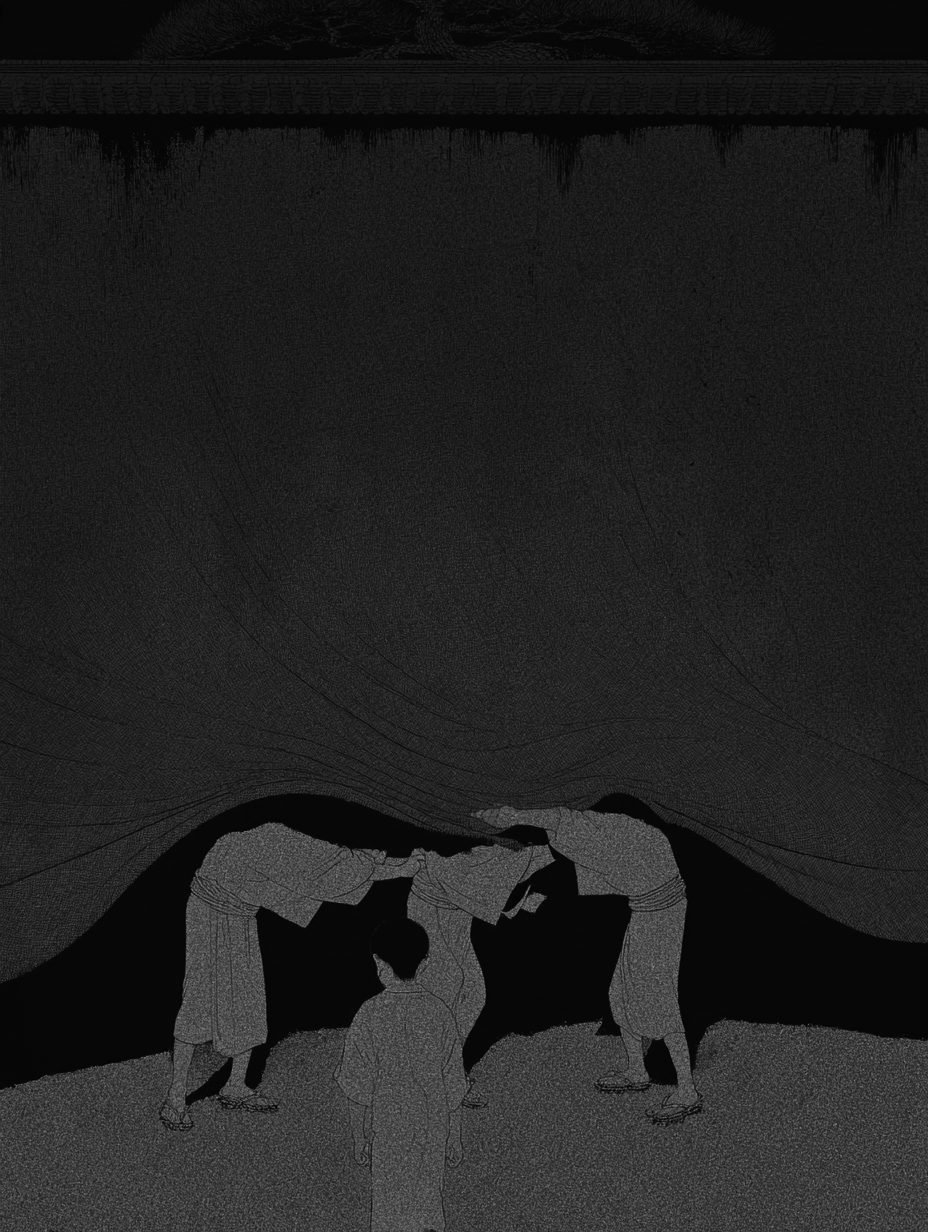
The boy they called Ako Hōshi was seven, and lived with his mother at Higuchi and Takakura, and his mother was one of the women who served in the Bath Chamber of the palace.
He went out that day with the other children of the lane. They went down towards Koroku-jō, four or five of them, and got as far as the open ground under the long earthen wall, and there they took hold of one another to wrestle in the way children do, three or four of them grappling in a knot with the others shouting.
Something came over the top of the wall.
The children who were watching gave the same account afterwards and none of them could better it. It was like a hanging cloth. It was like a length of curtain let down from the wall, and it came down over the knot of wrestling children and lifted, and when it had lifted, Ako Hōshi was not there.
They ran. They ran the whole way home, and then, having run, they said nothing at all to anybody, because they were small and had understood that they had seen something they would be blamed for.
His mother began looking for him that afternoon. She looked in the way mothers look, which is to say everywhere, and past the point where looking is sensible: the well, the ditches, the temple yard, the houses of children she did not know, the roads out of the city. She did this for two days and two nights. On the second night one of the children told what he had seen, and after that she had something worse than nothing.
On the third night, at about midnight, somebody came and knocked at her gate.
It was not the knock of a neighbour. It went on and on, hard and deliberate, filling the whole lane with the sound of it. The people in the house did not move. Then a voice on the other side of the gate said: I will give you back the child that was lost. Open the gate.
Nobody opened it.
The knocking stopped. There was a moment of nothing at all. And then the eaves of the house were full of voices — many of them, all round the roof, and they all laughed at once, one flat syllable, ha, and something was thrown down into the gallery at the side of the house with a heavy sound.
They brought a light out.
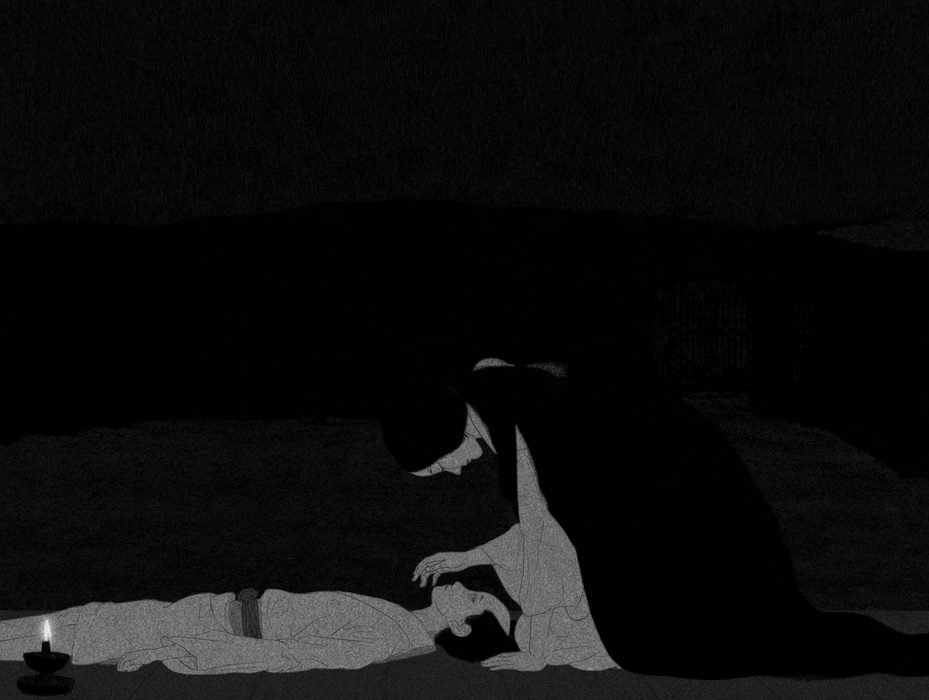
The child was lying in the gallery. He was limp, and he was warm, and he was breathing, and he was not like a thing that was alive. He did not speak. He did not cry, or reach for his mother, or look at the lamp. He lay where he had been put and his eyes moved, blinking, and went on blinking.
They sent for a verifier priest and set up a medium beside him, and the priest prayed to make whatever was on the boy pass across into her.
A great deal came off him.
What they found, when they looked, was horse dung. There were about three washing-basins’ worth of it on the floor of that room, and the record of it stops there, without a word about how it came to be in a house at midnight in the middle of the capital.
The boy never spoke again.
He lived. He was not taken, and he did not die, and he did not recover: he stayed as he had been put down in the gallery, a child who breathed and blinked and did not speak, and he was looked after in that house and grew, and he was alive still at fourteen or fifteen. After that, nothing. The one phrase anybody had for him was: a thing brought back to life.
Behind the Tale
Source. Kokon chomonjū, the Collection of Things Written and Heard in Past and Present, compiled in 1254; book seventeen, the book of transformations. The tale is dated to the Kenpō era, in the middle 1210s, and the boy’s mother is identified by her post in the palace and by the street corner where they lived.
The rite performed over the child is the one that stands in the classical collections drawn on here, and the pages before the tales set out how it worked: what is on the sufferer is moved into a hired body and dealt with there. Other tales in this book turn on the conversation that the transfer produces.
This one does not have it. What comes across into the medium never speaks, never gives a name or a reason, and is registered only as a quantity — a great deal of it came across — and then seen as dung on a floor. The demand at the gate is not a demand for anything. The laughter along the eaves belongs to more than one throat. What the tale records is a household that was offered the return of its child, refused to open the door, and received him anyway, on the terms of whatever was outside.
The cloth from the top of the wall, the children’s silence, the knocking at midnight, the words spoken through the gate, the laughter, the sound in the gallery, the blinking, the medium, the three basins, the years of silence, the age to which he was known to have lived, and the phrase it finds for him, a thing brought back to life, are all the collection’s; what became of him after that it does not say, and it closes by saying that the one who told it was there. It names no cause, and this telling names none.
The possession-seat appears again in the volume of this series on living spirits, where a boy is used in the same way, and two spirits quarrel through his mouth. The machinery is the same; what fills it here is nothing that would speak.
This is the first of the 34 tales in TSUKIMONO, each one followed by a note on where it comes from.