A Ghost Is Someone in Particular
Known by the flute
A widow in the Konjaku Monogatarishū hears a flute far off along the road at night, and knows whose it is before anyone comes into sight [1]. The collection, compiled early in the twelfth century, says only that she knew the playing for her husband’s. He had been dead for some time.
English readers usually meet Japanese ghosts as a figure: the white burial robe, the long unbound hair, the shape that thins away below the knees. That figure owes most to the Edo-period stage and woodblock prints, and to what came after them. The written records say surprisingly little about what the dead look like. What they care about is who has come. A yūrei in these accounts is not a species of spirit. It is one dead person, and the account is usually built around identifying which.
Recognition by particulars
The records settle that question with the kind of evidence a household or an office would accept. In a case collected by the Zen teacher Suzuki Shōsan for Ingabanashi, first printed in 1661, a maidservant who could not write takes up a brush, and the clerks recognize the hand of a dead official [2]. In Rōō Chawa, an eighteenth-century miscellany from the Aizu country, a dead man at a castle gate after dark gives his own name before he says anything else [3].
None of this is proof in a modern sense, and the compilers do not present it as proof. It is identification of the ordinary sort that villages and offices used for the living: a way of playing, a habit of the wrist, a name spoken at the gate.
What the living left undone
When the records say why the dead come back, the answer is usually a failure of the living, and a specific one.
Shinchomonshū, a collection of reported strange happenings put out under the name of Kamiya Yōyūken, sorts its material by kind and keeps a whole section for the souls of the wronged. One entry dates an excavation to the twenty-third day of the sixth month of Tenna 2, which is 1682, and names the inspector who ordered it [4]. The voice that speaks through a servant in the room asks to be dug out from under the floor and given proper rites, and says it bears the sick lodger no grudge. It asks for burial, not revenge. A dated record is not proof that the dig happened as written. It shows that the compiler wanted the account read as a matter of record, with a day, an office and a name attached.
In the same section, a dead soldier speaks through a young man at an evening gathering in a lord’s house and states his grievance outright [5]. The word he uses of himself is muen: one with no kin left to perform the rites owed to the dead. Rice had been sent to a temple to pay for his memorial services. The priest, the dead man says, left his memorial tablet lying on its side, set nothing before it, read no sutra over it, and bought a horse with the rice. The complaint is less supernatural than it sounds. It is an accusation of theft, made by the one party who could not otherwise bring it.
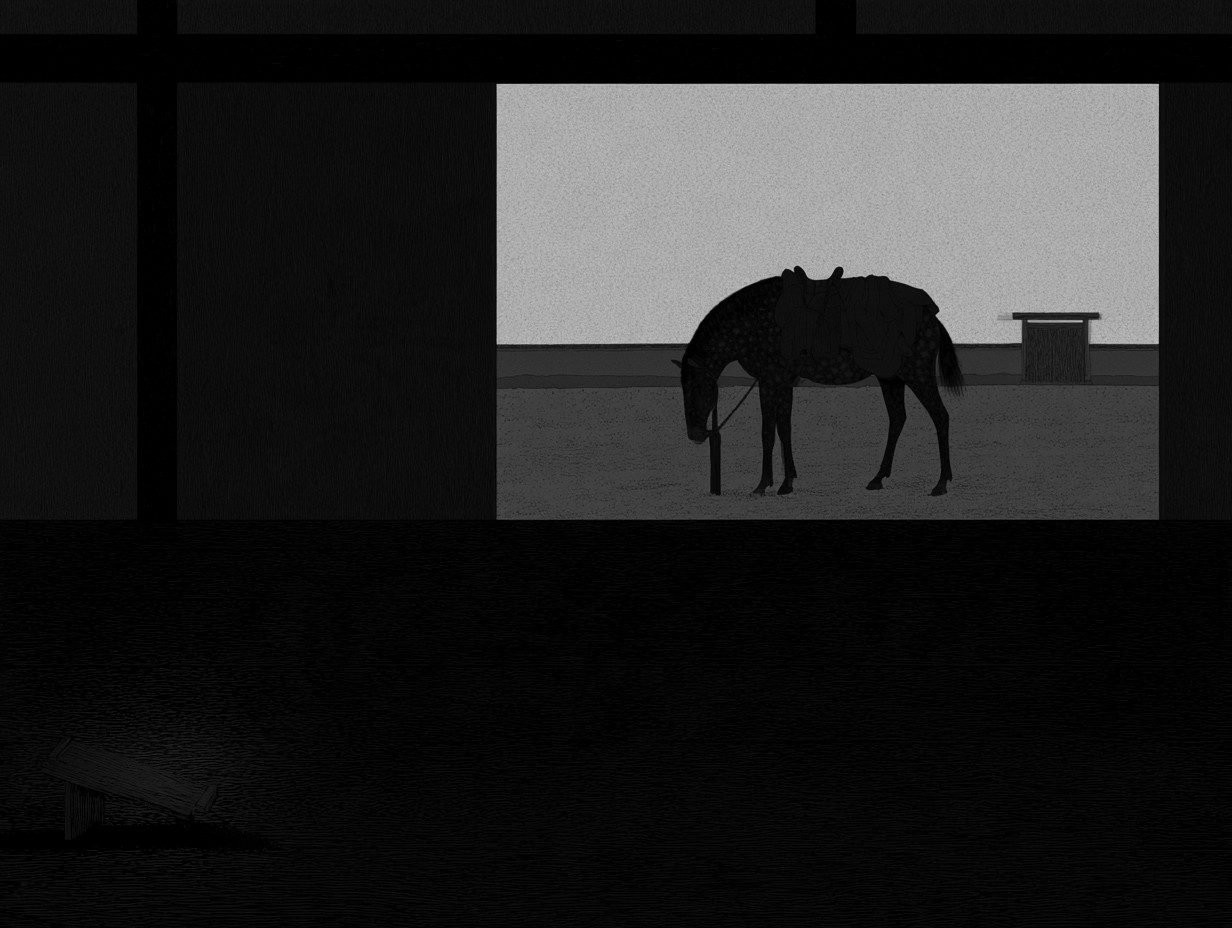
The memorial tablet, ihai, recurs across these accounts, and it helps to know what it was: a lacquered upright bearing the dead person’s Buddhist name, kept on the household altar. It is the one object in a house that stands for the dead. To leave it lying, or to break it, is to strike at the dead person’s place among the living.
Omissions at the funeral weigh as much as neglect afterward. Rōō Chawa tells of a wet-nurse in the household of Gamō Hideyuki, lord of Aizu, who died under a slander she could not answer and whose body was burned in a storm without even the rite of guiding, indō, the words a priest speaks to send the soul on its way [6]. The text sets the missing rite and her later walking side by side and never says that one caused the other. That restraint is typical of the careful compilers: the record places two facts together and leaves the joining to the reader.
The ones that do not fit
Not every dead person in these books has an errand, and not every one is identified. The Konjaku tells of a red robe crossing a garden in the capital at dusk and of the man who waited on the veranda with a bow [7]. No one learns whose robe it was. The compiler’s closing judgment concerns the archer’s boast, not the apparition.
Others return for what was promised rather than for what was left undone. In Kaidan Toshiotoko, an Edo collection whose preface is dated 1749, a dead wife comes back to her husband and argues from the vow she made as she died and from the three years they were married [8]. Her claim is on him, not on anyone’s rites.
The compilers also differ in what they are willing to vouch for. The magistrate Negishi Yasumori (1737–1815), who filled his notebook Mimibukuro with what visitors told him, vouches only for having been told, and says so when a poem in an account seems too well made to be genuine [9]. The Konjaku tales cited here give no dates; Shinchomonshū dates an event to the day. The Konjaku compiler closes the flute tale by remarking that the dead can evidently be seen in this world as plainly as the living [1]. That is his conclusion, set down after the story, and not something the story itself demonstrates.
A household matter
What draws me to these records is how domestic they are. The places are a room under which someone lay buried, a corner of a temple, a castle gate, a road at night. The complaints concern rites, rice, a tablet, a promise. One reading is that the yūrei of the old records is the reverse side of obligations every household carried: the dead needed tending, and when no one tended them, someone eventually heard about it.
The records themselves mark the limits of that reading. Some of the dead ask for nothing the living could give. Some are never named. The books that hold these accounts were made across several centuries for different ends — sermon material, a magistrate’s private notes, commercial collections of strange tales — and they do not agree on what the dead are or what they want. What they share is a habit of writing down, where they could, which one came, and what was said at the door.
Sources
- Konjaku Monogatarishū 今昔物語集, compiled early 12th c., book 27, tale 25. Wikimedia Commons
- Suzuki Shōsan, Ingabanashi 因果物語, first printed 1661, middle book, item 20 (first case). Wikipedia (ja)
- Misaka Haruyoshi, Rōō Chawa 老媼茶話, mid-18th c., item “The Ghost of Sukawano.”
- Shinchomonshū 新著聞集, attributed to Kamiya Yōyūken, mid-18th c., twelfth section, entry on a corpse that speaks through a living man. Wikipedia (ja)
- Shinchomonshū, twelfth section, entry on a brave man’s spirit and the slander of a flatterer. Wikipedia (ja)
- Misaka Haruyoshi, Rōō Chawa, item titled “Ghost.”
- Konjaku Monogatarishū, book 27, tale 4. Wikimedia Commons
- Kaidan Toshiotoko 怪談登志男, preface dated Kan’en 2 (1749), book 5, item 24.
- Negishi Yasumori, Mimibukuro 耳嚢, book 1, entry “The Ghost’s Poem.” Wikipedia (ja)
Further Reading
- Lafcadio Hearn, “The Reconciliation,” in Shadowings (1900) — Hearn’s English retelling of Konjaku book 27, tale 24, the tale that stands immediately before the flute tale in the same book.
Found an error? Write to kwaidanote@gmail.com — corrections are made on this page and dated.