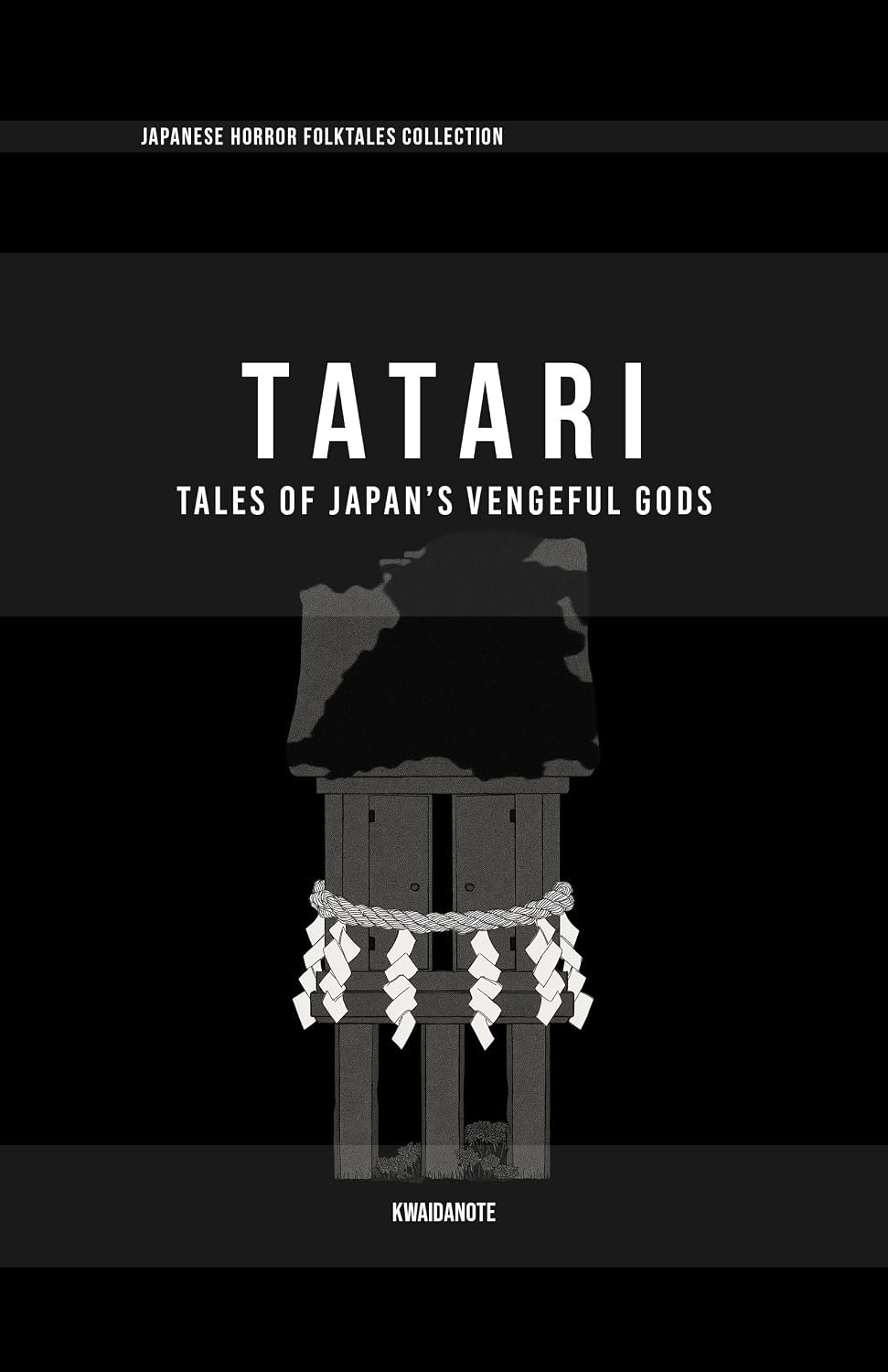
Japanese Horror Folktales Collection — No. 8
TATARI
Tales of Japan's Vengeful Gods
Twenty-one Japanese tales of tatari — the anger that outlives a life: gods who declare a plague their own will, and dead men whose grievance a state was forced to answer.
The word is usually translated “curse,” and the translation is not wrong; it is only late. In Japan’s oldest chronicles, tatari is something a god does. A pestilence empties half the houses of a country, and the record does not look for a poisoner or a sin; it asks which god is doing this, and what that god wants.
Not all of these are ghosts. Some are gods who were never human, whose anger needs no injury to explain it. Some are political terrors that speak in the grammar of haunting because no other grammar was safe. Some are the state itself, apologising.
21 tales in this volume
- The God who Asked for his Son
- The Twisted Neck
- The Ring of Reeds
- The Water Jar
- The Bones that Emptied a Province
- The God on the Chopping Board
- The Punishment that Waited Forty Years
- The Starving Prince
- The Man at the Duty Door
- Now the Breast is Opened
- Seized from the Air
- Seven Oxen at the Court of the Dead
- The Thunder’s Return
- The Calligrapher’s Name
- Eighty-four Thousand Rats
- One Room at Kawara Temple
- The God who Turned his Back
- Who Do You Think I Am
- The Foot in the Steam
- The Returned Sutras
- The Head that Would not be Dead