Subject
Onryō 怨霊
The vengeful spirit of the dead. The tradition names three great ones — Sugawara no Michizane, Taira no Masakado, and Emperor Sutoku. Only Sutoku held imperial rank, which is partly why his curse was held the most fearsome.
Notes
- The Emperor Who Became a Demon Emperor Sutoku, the onryō of Sanuki: a curse recorded in court diaries and temple records.
- The Hannya Mask Is a Woman's Face Two gilded horns, metal teeth, and above them a grieving brow. The Noh mask usually called a demon shows a woman in the middle of becoming one.
- Three Names for the Dead Yūrei, onryō, goryō: three words the Japanese record uses for a dead person, and the difference between the last two is something the living decided.
- Masakado's Head in the Financial District A tenth-century rebel's head was exposed in Kyoto. The mound said to hold it stands among Tokyo's banks, kept by a society with a renovation schedule.
- The Scholar They Made a God Sugawara no Michizane is the deity students pray to before examinations. What the court enshrined first was not his learning but his anger.
- The Oldest Ghost in Kyoto Predates Kyoto Lightning killed a man sheltering under a pine, before the capital existed. Three centuries later the corner where it stood was still called the demon hall.
Volume
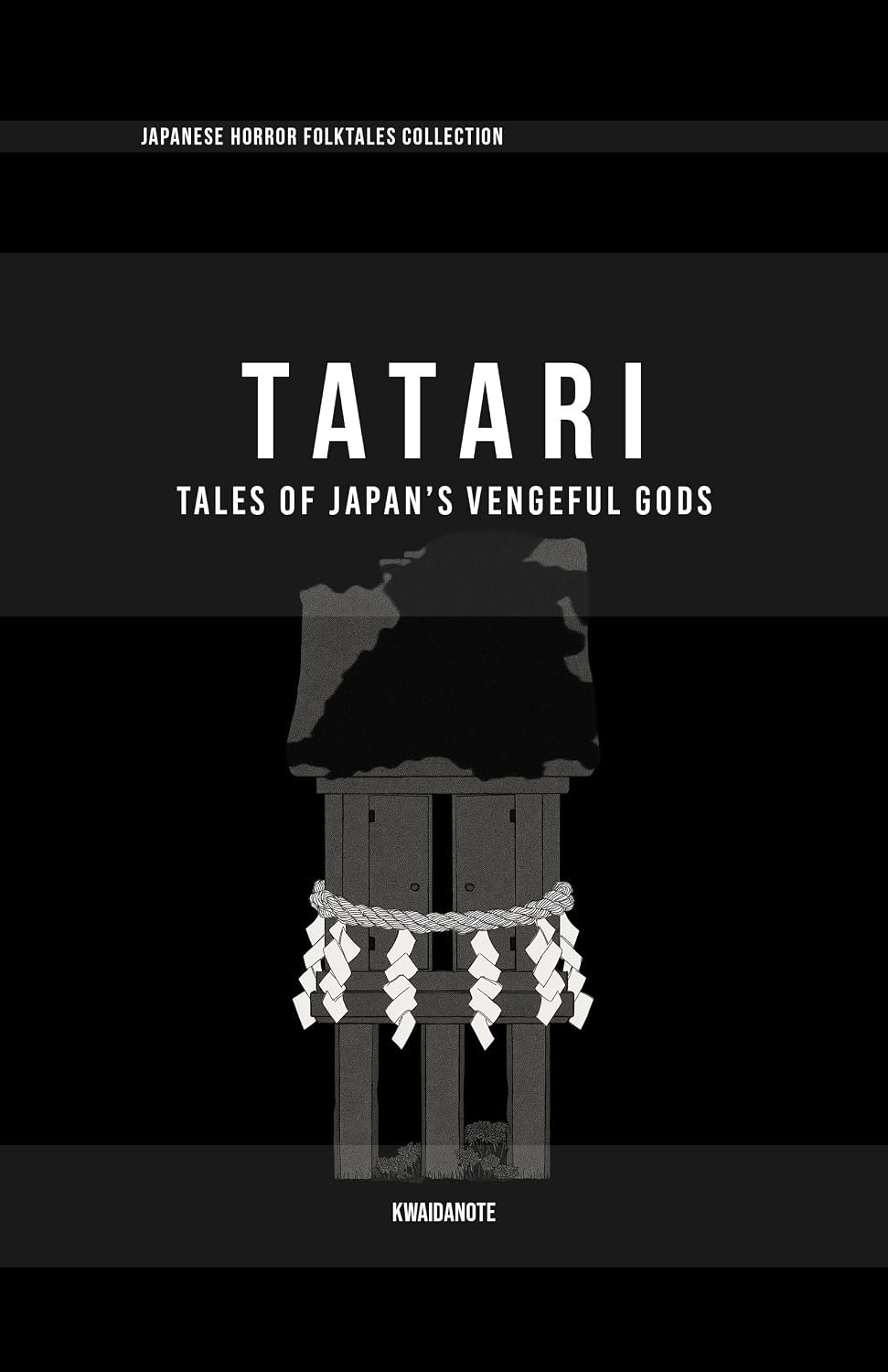
Japanese Horror Folktales Collection
TATARI
Tales of Japan's Vengeful Gods
Twenty-one Japanese tales of tatari — the anger that outlives a life: gods who declare a plague their own will, and dead men whose grievance a state was forced to answer.
Included with Kindle Unlimited