The Inugami Was Made of Quotations
Something a House Was Said to Have
The inugami, the dog-god, is not a creature anyone meets in these records. It is something a household was said to possess and to pass down, along with the house and the fields.
It belongs to a family of regional names for the same idea — the tōbyō of the Hōki country, the Osaki of the eastern mountains, the kuda carried in a length of bamboo, the person-fox of Izumo. The modern Japanese reference works treat these as one belief under different names.
Our note on possession, The Name on the House, sets out how a household came to be counted as one of these. This one is about the written instructions for making an inugami: where they come from, and what they are made of.
The Oldest Trace Is an Order About People
The earliest documentary appearance of the belief is not a story.
In 1472 a secretary to the shogun wrote to officials in the province of Awa, on Shikoku, instructing them to find and punish those who used the dog-god. The reference is standard in the Japanese reference literature, though I have not seen the document itself and give it at second hand.
The inugami enters the written record as a category of person to be dealt with, not as a tale to be told. Everything else in the documentation comes afterwards.
The Instructions, and What They Are Made Of
Two sets of instructions are recorded. Each is given here in a single sentence, which is more than the subject requires and less than it usually gets.
In one, a dog was starved and beheaded, and the skull buried at a crossroads where people would pass over it, and taken up again later. In the other, the animal was buried to the neck with food set just beyond its reach, and then beheaded with a saw of bamboo.
Now the part that matters. The first of these survives in a collection of strange tales reprinted in 1915, which is quoting a work of 1741 by a priest — and that 1741 work is known here only through the quotation. The second appears in a book on superstition and delusion published in 1928 by a physician, who attributes it to a history of religion and custom whose title cannot now be traced.
Neither instruction reaches us except as one book quoting another book. There is no point at which the chain touches something a writer says he saw.
Nobody Recorded It Being Done
No contemporary account of the procedure being carried out has been found: no witness, no prosecution, no administrative record of the act itself. That is an absence and not a proof, and it should be stated as an absence.
Something else was recorded, though, and it is worth putting in its place. A history of Japanese mediums published in 1930 notes a woman in Ōita prefecture who cut the head from a dog, dried what she took from it, and sold the result as an inugami.
What the record shows actually happening is not the rite. It is the trade in the belief.
Who Drew the Map
The area in which the belief was reported — Shikoku, and westward through the Chūgoku provinces to Kyushu and the southern islands — was mapped piecemeal across the twentieth century, by folklorists first and social anthropologists afterwards. No single survey can honestly be named as the first; the reference works cite half a dozen scholars and none of them as the originator.
What can be said about that map is the part usually left out. It was drawn from outside, by people writing about districts they did not live in, and it was drawn long after the exclusions it describes were in place. It is a record of an existing arrangement, not a discovery.
Where It Was Said to Come From
There are two standing positions and neither has won.
One traces the belief to Chinese practice, pointing to the dog-ko described in a fourth-century Chinese collection of strange accounts, and to the idea reaching Japan from there. The other holds that it cannot be read as a straightforward continuation of that, and is better understood as an offshoot of fox-spirit belief that acquired a dog.
The volume of possession tales this site publishes takes a position on the disagreement itself: the old records do not agree on how the first inugami was made, its own thirty records do not agree either, and it leaves the disagreement standing rather than choosing. That seems right, and this note does the same.
What the Records Were Used For
This is the part that is not in doubt.
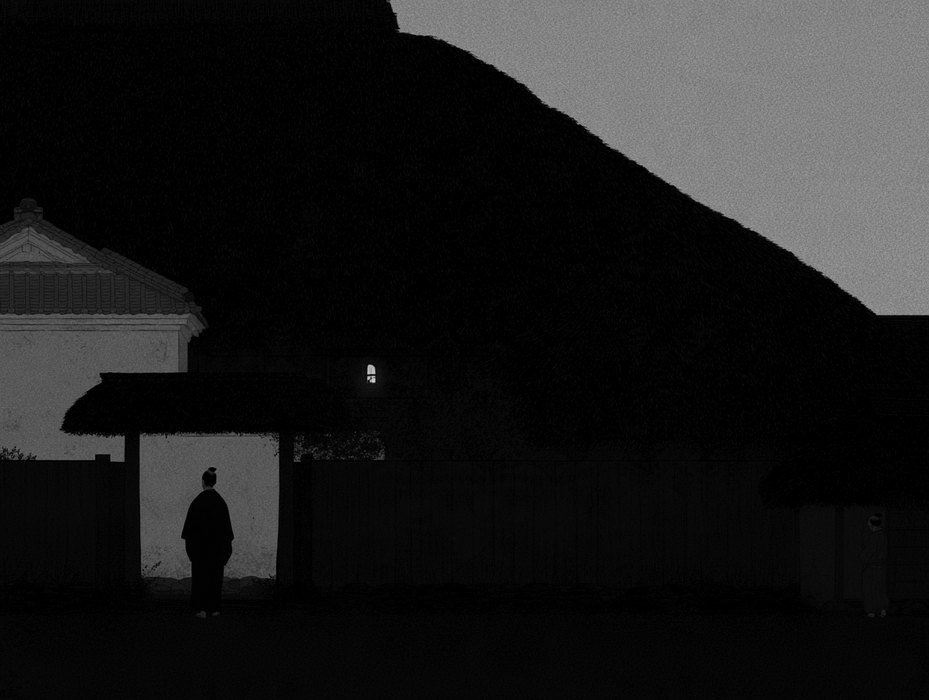
A household said to have an inugami was a household people did not marry into. Families were checked before a match. Land next to such a house was land with a question attached to it. In the districts where the belief was strong the exclusion outlasted anyone’s memory of how a particular house had come to be named.
A paper published in a Japanese psychiatric journal in 1998, on possession in Tokushima, reads the whole apparatus in those terms: not as a belief that occasionally caused trouble, but as a mechanism a community used to mark and exclude particular households when it was already in conflict. The instructions, on that reading, are not a method. They are a reason, supplied afterwards, for treating people in a way that was already happening.
The harm is described in the literature as continuing into the modern period. I have not been able to establish reliable dates for its last stages and will not guess at them.
What This Note Is Not
To be plain about it, in the same terms the book uses in its own front matter.
Nothing here is evidence that anyone was ever possessed. Nothing here describes any family, then or now. Where a record says that a village marked a household, this note is recording a persecution and not reporting a fact about the household.
The dog is in the books, copied from one book into the next for three hundred years by people who had not seen the one before. What happened to the people happened in the arrangements for marriages and for land, and it did not need the dog at all.
Sources
- Setsusō yawashō 雪窓夜話抄, a collection of strange accounts by Ueno Tadachika 上野忠親 of the Tottori domain (1684–1755), in the 1915 reprint series of materials of the Inaba and Hōki provinces. It gives the first set of instructions as a quotation from an earlier work of 1741 by a priest; that work is known here only through the quotation, and the title under which the reference literature cites it could not be confirmed.
- Morita Masatake 森田正馬, Meishin to mōsō 迷信と妄想, 1928; the second set of instructions, attributed there to a work that cannot now be identified.
- Nakayama Tarō 中山太郎, Nihon fujoshi 日本巫女史, 1930; the sale of a manufactured inugami in Ōita.
- Kagawa Masanobu 香川雅信, “Inugami possession in Tokushima,” Seishin igaku 精神医学 40:11, 1998.
- The order of 1472 concerning users of the dog-god in Awa province, cited here from the Japanese reference literature.
Further Reading
- Carmen Blacker, The Catalpa Bow: A Study of Shamanistic Practices in Japan, 1975
- Yoshida Teigo 吉田禎吾, Nihon no tsukimono, 1972
The reading in “What This Note Is Not” is KWAIDANOTE’s own.
Found an error? Write to kwaidanote@gmail.com — corrections are made on this page and dated.