She Promised the Foxes Her Body
An Entry in a 1927 Book
A book on the uncanny in the animal world, published in Tokyo in 1927, devotes its longest chapter to the fox. The chapter has a section of worked examples, then a section on possession, then miscellany, then a survey of what older writers said.
Under possession, between an account of a dying woman who leapt a six-foot wall and an account of a man possessed while digging yams, there is a short entry headed: it wants a person’s dead body.
What Happened at the House
Around 1916 or 1917, a wealthy old woman of a village died of illness.
Several wild foxes came and gathered around the house. Whenever the people inside were off their guard, the foxes got in and tried to get at the body.
The household found this deeply strange, and had great difficulty driving them away. And it created a practical problem, which the entry states plainly: if she were buried in the ground, the foxes would certainly dig her up.
So the family broke with the custom of that place and had her cremated instead.
That several foxes should have made so bold an attempt became, the entry says, the great strange event and the great question of the village.
A Year Later, in Court
The district was one where, the entry notes, there had long been a practice of setting foxes on people one bore a grudge against.
About a year after the old woman’s death, a man of the same village was possessed. And the fox let slip who had sent it — which gave the family a name, and they brought a suit against that person.
So a public prosecutor came out from the district court to the man’s house to conduct an inspection on the spot.
And there, the entry records, the plaintiff’s lawyer and the fox conducted a great debate — an affair that got into the newspapers.
I want to be exact about what is being described. Not a séance and not a temple. A criminal complaint, a prosecutor travelling out to view the scene, counsel for the plaintiff present, and the examination proceeding by questions put to a fox speaking through a man. Whatever one thinks happened in that room, the machinery of the state was in it.
What the Fox Said
Among the things the fox blurted out during that examination was the answer to the village’s year-old question, and the entry says the villagers clapped their hands when they heard it.
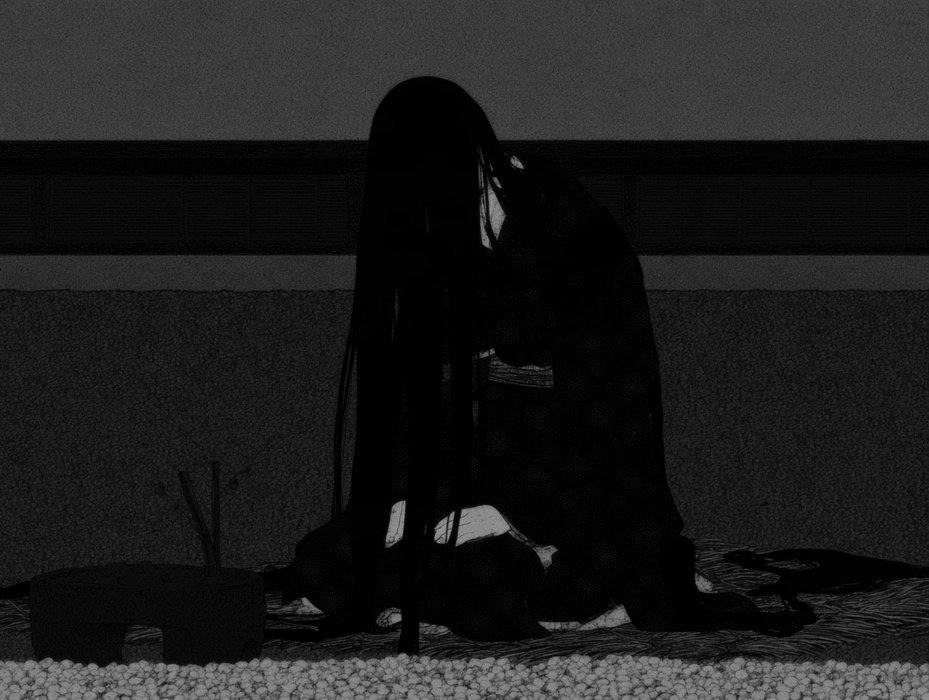
When the old woman had been poor — taught by whom, nobody knew — she had begun carrying food that foxes like up to the hill behind her house, and giving it to them, and asking that she be made rich within her own lifetime.
And in exchange, she told them, when she died they could have her body.
So the foxes met her request, and brought her money, carrying the coins in their mouths, from one place and another. Most of it came from a single wealthy house in that district.
And the old woman, who was never seen to do anything, grew richer year by year, and everyone said it was strange.
The Shape of the Bargain
It is worth stopping on the terms, because they are not the terms of any other fox story on this site.
The notes on this site about the fox deal with animals that deceive, that possess, that repay a kindness, that are mistaken for something else. In all of those the fox is either an agent doing something to a person or a beneficiary of something a person did.
Here it is a counterparty. A poor woman makes an offer, the offer is accepted, both sides perform, and the performance runs for decades. She delivers food up a hill; they deliver coins; she becomes rich; she dies; they come to collect.
The only reason it reads as horror is the item she put up. And the only reason the village ever found out is that the collection was attempted in front of witnesses, and failed.
What the foxes were owed, on the account as the fox gave it, they never received. The body went into the fire.
What the Author Did About the Names
Here is the thing in this entry that matters most, and it is not in the story.
When the author printed the dead woman’s name, and the name of the man possessed a year later, he marked each of them with a note: assumed name.
He did that in 1927, in a book of collected marvels, about people in a village who had been in a newspaper. Nobody obliged him to. The note on this site about Inoue Enryō’s journey to look at possessed households deals with a writer of the same period who did the opposite, and printed a region, a province and a town as an itinerary.
But his protection is uneven, and the unevenness is worth seeing. He changed the two names at the centre. He left in the province, the district, the village, the hamlet, the court — and the name of the wealthy house the money was said to have come from, describing it as the most prominent family in the area.
So the two people accused of dealings with foxes are shielded, and the household named as the victim of the theft is not.
Why This Note Names Nothing
That is the reason nothing above is located.
The belief in this entry is the same one the inugami notes on this site keep a rule about: a conviction that certain households deal with animals, which in living memory decided who a village would let its children marry. A fox set on an enemy, a lawsuit, a village clapping its hands at the explanation — these are neighbours accusing neighbours, and the accusation had consequences.
The author’s pseudonyms show that he knew that much in 1927. Our position is simply that he did not go far enough, and that the geography is not ours to reprint.
What can be said without harm is everything that makes the record remarkable: that foxes were reported trying to reach a corpse; that a family changed how they buried their dead to prevent it; that a prosecutor went out to a house; and that the explanation, when it came, was a contract.
Where the Book Sits
One note on the publisher. The house that issued this volume is the same one that published the work of Sasaki Kizen, whom our note on him deals with.
That places this book squarely in the period this site keeps returning to. Between roughly 1900 and 1930 a small number of people in Japan went about collecting this material and putting it into print — the lecturer who wanted it abolished, the folklorist who proofread ghost stories before he became a folklorist, the naturalist who counted up ghost handprints, the man from Tōno who supplied the tales. This is one of the last of them, and it is the one that thought to change the names.
Sources
- Okada Kenbun 岡田建文, Dōbutsukai reiishi 動物界霊異誌, published in Tokyo in 1927; the chapter on the fox, section on possession phenomena, the entry headed “it wants a person’s dead body”. Read here in the text of the entry. The dating to around 1916–17, the death of the wealthy old woman, the foxes gathering and getting into the house, the fear that a buried body would be dug up, the decision to cremate against local custom, the district’s practice of setting foxes on enemies, the possession a year later, the fox naming who sent it, the suit, the prosecutor’s visit, the debate between the lawyer and the fox, the newspaper coverage, the account of the bargain, the food carried up the hill, the coins brought in the mouth and the woman’s increasing wealth are all from this entry.
- The same entry, for the two personal names, each of which the author marks as an assumed name, and for the province, district, village, hamlet, court and named wealthy household, all of which he prints and none of which is reproduced here.
- The volume’s own title page and series statement for the publisher, which also issued the work of Sasaki Kizen.
The readings in “What the Author Did About the Names” and “Why This Note Names Nothing” are KWAIDANOTE’s own.
Found an error? Write to kwaidanote@gmail.com — corrections are made on this page and dated.